
How They Trap You
It's dangerous to go alone, take this
Welcome back to the Writer’s Secret Weapon. It’s good to see you again. I’m John, and this is where I talk about what you need to know about writing. Sometimes we talk about craft, sometimes we talk about the industry around writing.
Today we’re talking about…
Van Gogh sold one painting
Today I want to make you aware of something. Or maybe you’re already aware of it, but now we’re going to name it.
Let’s say you’re a new writer. It’s hard to quantify exactly how much time is or isn’t required to have that “new” label, but let’s say you’ve been writing somewhat consistently for a few months to a year. The time doesn’t really matter, not as a specific number, it’s more about whether or not you consider yourself “new.”
Once you figure out what you’re going to write (a book let’s say) and where you’re going to write it (Google Docs in this case), you have to tackle the problem of how to write the book.
And where do we start when we don’t know how to do something? We do a little research. We start researching. Pop open a tab, hit DuckDuckGo and YouTube and go see what’s out there for writing advice to get started.
Once you click whatever the first few results are, you’re already in the first trap.
From the beginning of your exposure to writing advice, you’re seldom getting practical unbiased technical craft advice. You’re getting slanted advice, advice with an agenda - advice with an eye to success as defined by sales.
Sure, you can learn about characters and plot and middle-of-the-book sag and themes, but there’s an undercurrent here pulling you out away from the safety of a space without bias. The first trap a writer finds is that the industry tells you that something is only good if it sells. Trade the art for income, and let your bank account be your yardstick for how good a writer you are.
Never mind that you just started. Never mind that maybe you haven’t written anything more than a few pages of a rough idea and you’re not even sure you’re doing it right. Right there, on the screen, is a ton of links and videos of people writing at length or showing up in videos with a stack of books at their back telling you how to be successful as a writer. All you need to do is trade the potential of art for the potential of sales.
That’s not a difficult transaction for someone who just got started and who wants to be creative and have money. It’s still a bad transaction, but it’s easy to get someone on board with it.
I’m going to remind you now that Van Gogh sold one painting in his lifetime, and that one of the greatest artists ever was not a commercial success. I’ll also remind you that a lot of the authors who wrote major seminal works (Poe, Kafka, Philip K Dick) died more or less penniless, and not because they blew their fortunes on exotic things like extra groceries and rent and healthcare.
Trading your artistic potential for commercial viability is something I’m incredibly opposed to, but let’s be clear - I’m not swinging the pendulum the other way and saying that you should only write stuff that’s the opposite of sales worthy. I’m saying you should just write, independent of whether or not some algorithm or some white lady on the internet gives your book three stars down the road.
This is not a position of privilege. This is not me looking down from atop the mountain of cash speaking to you. There’s no money vault here. This is me telling you that whatever you’re writing, whether it’s a passionate sexy romance novel or a big sci-fi epic with cyborg animals or whatever, your first priority is to write, even when you aren’t sure what the hell you’re doing. Make the thing. Just get the idea out of your head so that it lives somewhere, and then over time you can start crafting it and making it the best it can be after the idea is on the page.
Why this trap is a trap
The argument “good is what sells” or any variation that says quality is tied to sales only holds up if you agree that we should only make things for the purposes of selling them for the most amount possible to as many people as possible.
And if that’s what you’re going to do with your book(s), great, I hope that works for you and I hope you find all the financial benefits you want. But please understand that when you’re agreeing to that argument and writing to the market or the algorithm or just trying to write with some ideal customer in mind, you’re saying your creative work is pretty much a widget coming out of a factory. It’s yours, you wrote it, but its purpose is commercial and transactional more than artistic. Because if it were artistic, if you were totally focusing on creating the best thing you could independent of who might buy it later, then you’d be putting the “business” of being a writer to one side for the sake of something purer and with greater integrity. The real business of being a writer is in creating something to the best of your ability, for no reason other than you want to make a thing and express something of yourself.
Don’t gnaw off your own foot to get out
In the past I’ve gotten quite a bit of pushback for my position that art made with the intent to sell well is on some level(s) less artistic than art made with expression at its heart. I usually hear this from people who have a stake in things making money, and honestly, they’re the people are doing the writing, they’re writer-adjacent. As a fellow writer-adjacent person, I understand the fear that someone or some thing is going to phase you out of your work, but that’s not a reason to double down and tell people to make stuff that sells just so you can keep working. Tell them to go make stuff, audiences can be found anywhere at any time.
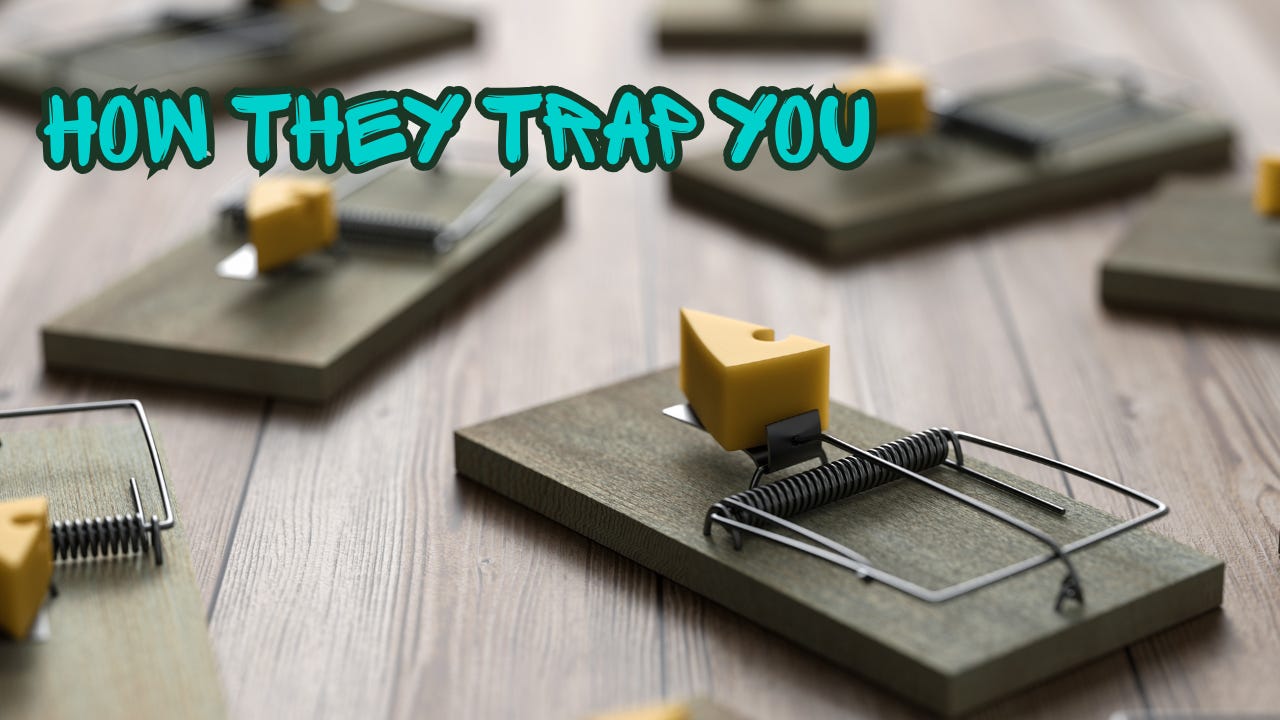
Writers, this also applies to you too - there’s a ton of content out there that’s going to scream at you to track what sells and know numbers and metrics. It’s easy to get stuck comparing yourself to everyone else, especially when you’re just getting started and someone else is putting out a sequel. Their finished work and your unfinished work are never going to be comparable. Don’t prioritize the industrialization when you’ve just really started. Art, like the cheese, stands alone.
Publishing is a task. Writing is a skill. Don’t let anyone confuse the two.
But what happens when you get more experience?
The traps of content, commodification, and transactional thinking aren’t limited to new people. There’s a second, sneakier trap for the people who already got their ducks in a row. They know they don’t need the elementary advice or the starter guides. They have a draft, maybe they’ve had this draft going in iteration after iteration for years. They swear they’re not a beginner. And maybe they would define their problem as “I just can’t seem to finish” or “I always get to a certain point and then stop” or they’ve got a dozen half-started stories going across so many genre and series and ideas.
Welcome to the second trap. You trade focus and skill for the widening gap of what you could do, and you start moving laterally rather than vertically towards your goal. Remember your goal - that you wanted to write something, start to finish, and then publish it - because that ability to make a decision about what you’re writing and then doing the work necessary to go finish it, that’s what makes you a writer more than any metrics or market trend or whatever the new hot AI agent could be after you hand over your email address and some money.
So why is that a trap?
It’s not automatically wrong or bad to write something then switch to something else. It doesn’t break some unspoken rule, it's not a sign you’re a bad writer. The problem comes in when you start a whole stack of things because starting stuff is something you know how to do and it’s fun and everyone pats you on the head when you start. Being a writer-who-forever-starts is not the fast track to anywhere other than frustrationville.
If you start and start and start and then restart and restart and restart, you’re missing about half the tools you’re going to need to make that art the way you want. Yes, you will get very good at opening scenes. Yes, you’ll get very good at writing second chapters. But if you never seem to make it past the 10k word mark or the 40k word mark or your second act seems to go on and on for 200,000 words without a climax in sight, you’re missing critical tools.
And the industry knows this. They know about the gap between those that will and those that won’t. The writing advice and even the publishing industry both pride themselves on knowing that a lot of writers will never really push their art forward, so that publishing can take the best mediocre thing to cheaply hold up as an ideal and leave everyone else who might have some art in them to languish with the idea that they’re not good enough because they can never seem to get anywhere.
Self-rejection and self-disqualification are how the industry convinces you that you’re not good enough while selling you products that widen the gap - frustration is baked in. They’ll keep you busy and distracted, offering you trash and then frame it as though the problem is entirely yours.
This means the writing-adjacent industry can prey on you when you get to this point. They’ll offer you content to get you excited to start the next new hot thing, and barely talk about finishing the existing stuff unless they’re telling you to just get it done or that once you do get it done (however that happens), then there’s a whole pile of brand new things like marketing and audience growth and of course they have the perfect solution to sell you.
Solutions solutions solutions
So what can you do?
Go inward. Go into your own experiences. This isn’t “write what you know", this is “write what you can express and feel based on what you’ve lived.” We’ll talk about that next time. But if you’re not making the inward search, your writing is going to miss chances to really build a connection with your reader.
Now you know the traps, so that helps. You know what to focus on instead (write your thing, get it out onto the page, then do something about it), and you know that you’re going to get purchasable “advice” from all corners telling you what you should be doing instead.
I’m a firm believer in the idea that with a reasonable goal, good information, and support, anyone can accomplish anything. You can set the goal, I’ll bring the information and support here and elsewhere.
Love you. Talk soon.